Pokemon Card Investment Guide
Pokemon Cards as an Asset Class
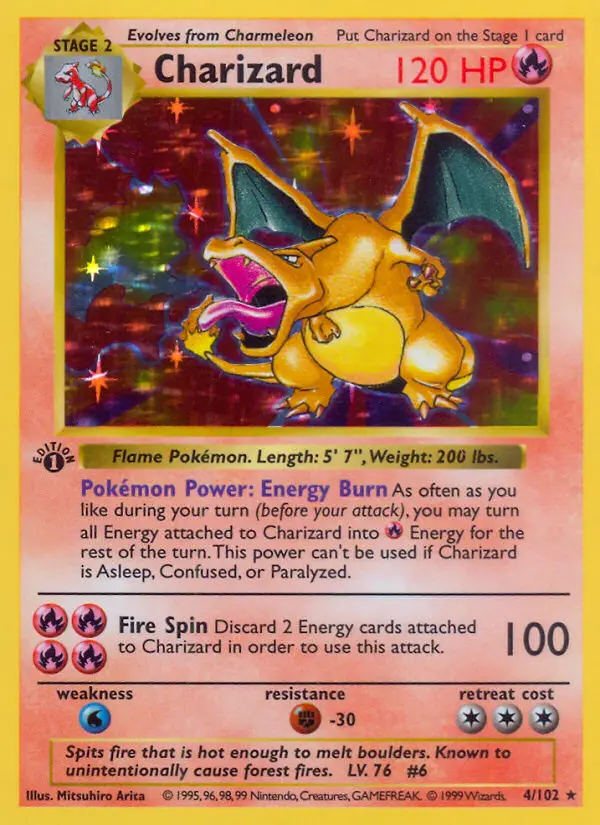
The Pokemon card market hit $12.8 billion in annual retail sales in 2023, and secondary market transactions add billions more. Cards have outperformed the S&P 500 over certain periods — a PSA 10 Base Set Charizard appreciated from $500 in 2005 to $50,000+ in 2024. But not every card is a good investment. Understanding what drives appreciation separates smart collectors from speculators who get burned.
What Makes a Card Appreciate
Fixed Supply
The single most important factor. First Edition prints, vintage sets, and limited promotional cards cannot be reprinted. When supply is fixed and demand grows, prices rise. Modern sets can be reprinted for years, which is why most modern cards lose value after release.
Iconic Pokemon
Charizard, Pikachu, Mewtwo, Umbreon, and Gengar command premium prices across every era. Cards featuring these Pokemon outperform equivalent cards of less popular characters by 2-5x on average. The original 151 Pokemon carry generational nostalgia that newer characters have not yet earned.
Condition Scarcity
A PSA 10 Base Set Charizard is worth $50,000 while a PSA 7 of the same card is worth $3,000. The card itself is not scarce — millions were printed. But the number surviving in gem-mint condition is tiny. Grading creates a secondary scarcity layer based on condition.
Cultural Moments
Logan Paul buying a Pikachu Illustrator, viral TikTok openings, new movie releases, and game launches all drive temporary and sometimes permanent price surges. Cards tied to cultural moments appreciate faster during hype cycles.
Vintage Investments: High Confidence, High Entry Cost
WOTC Era (1999-2003)
These are the blue-chip Pokemon investments. Base Set, Jungle, Fossil, Team Rocket, Gym Heroes/Challenge, Neo Genesis/Discovery/Revelation/Destiny, and the e-Series (Expedition, Aquapolis, Skyridge) represent fixed-supply cards with proven multi-decade appreciation.
Best vintage picks:
- Base Set 1st Edition holos (any grade) — floor price continues rising annually
- Skyridge and Aquapolis holos — lowest English print runs ever, severely undervalued relative to Base Set
- Crystal-type cards — unique reverse holo treatment, gorgeous art, extremely scarce in high grades
- Neo Destiny Shining cards — Shining Charizard, Shining Mewtwo, and Shining Gyarados are fan favorites with small populations
Gold Star Era (2004-2007)
Gold Star Pokemon from EX-era sets are iconic chase cards with distinctive artwork showing the Pokemon in a natural setting. Espeon and Umbreon Gold Stars from POP Series 5 lead the pack at $40,000-80,000 for PSA 10 copies. Even PSA 7-8 Gold Stars have shown strong annual appreciation.
Modern Investments: Lower Entry, Higher Risk
Sword & Shield Alt Arts
The alt art chase cards from 2021-2023 are the leading modern investment class. Key picks:
- Umbreon VMAX Alt Art (Evolving Skies) — $250-350 raw, $3,000-5,000 PSA 10. The defining card of the SWSH era.
- Moonbreon has become a generational chase card, and Evolving Skies going out of print strengthens the long-term thesis.
- Rayquaza VMAX Alt Art — $100-150 raw. Second most desirable alt art from Evolving Skies.
- Gengar VMAX Alt Art (Fusion Strike) — $80-120 raw. Gengar's popularity keeps this card consistently in demand.
Scarlet & Violet SARs
Still in the early appreciation phase. The most promising:
- Charizard ex SAR (151) — $100-140 raw. The set's poster card with strong long-term prospects once 151 goes out of print.
- Mew ex SAR (151) — $60-80 raw. Mew's popularity and the set's limited print window support appreciation.
- Eeveelution SARs — Any SAR featuring an Eeveelution has built-in collector demand.
The Grading ROI Calculation
Grading is an investment decision with its own return calculation:
| Card Value (Raw) | Grading Cost | PSA 10 Multiplier | ROI if PSA 10 |
|---|---|---|---|
| $20 | $25 | 3-5x | $35-75 profit |
| $50 | $25 | 3-5x | $100-200 profit |
| $100 | $25 | 2-4x | $75-275 profit |
| $500 | $50 | 2-3x | $450-1,000 profit |
The catch: not every card grades a 10. Modern cards grade PSA 10 roughly 30-50% of the time. Vintage cards grade 10 less than 5% of the time. Factor in the probability when calculating expected ROI.
Grade your best raw copies and hold the PSA 10 results. Sell or trade the 8s and 9s to recoup grading costs.
Market Timing
Pokemon card prices follow cyclical patterns:
- Set release surge (weeks 1-2): Chase cards peak in price from hype and low supply
- Post-release dip (weeks 3-8): Prices drop 20-40% as more product is opened
- Stabilization (months 3-12): Cards find their natural price level
- Out-of-print appreciation (year 1+): Sealed product and chase cards begin appreciating once the set is no longer printed
The best time to buy modern cards for investment is during the post-release dip, 4-8 weeks after a set launches. The best time to sell is during cultural moments or hype cycles.
Building a Pokemon Portfolio
Treat your Pokemon investment like any portfolio — diversify across eras, price points, and card types:
- 50% vintage blue-chips — WOTC holos, Gold Stars, trophy cards. Steady appreciation, proven track record.
- 30% modern chase cards — Alt arts, SARs from popular sets. Higher upside, higher risk.
- 20% sealed product — Out-of-print booster boxes. Historically the most consistent appreciators.
Keep records of every purchase: date, price, condition, and source. This data helps you track actual returns and make better future decisions. Pokex scans create a digital inventory that simplifies this process.
What to Avoid
- Currently in-print modern sets — Reprints suppress prices. Wait until a set goes out of print.
- Non-iconic Pokemon — A SAR of a random starter nobody cares about will not hold value like a Charizard SAR.
- Damaged vintage unless extremely rare — A damaged Base Set Pidgey is worthless. A damaged Pikachu Illustrator still sells for $100,000+. Damage tolerance scales with rarity.
- Grading common cards — A PSA 10 Wooloo is still a Wooloo. Only grade cards where the PSA 10 premium exceeds the grading cost by 3x or more.